How Broadcast Timing Influences In-Game Line Adjustments for Association Football and Links to Promotional Credits at Digital Entertainment Venues
Kirjoittanut Finley Bauer · 2.8.2026
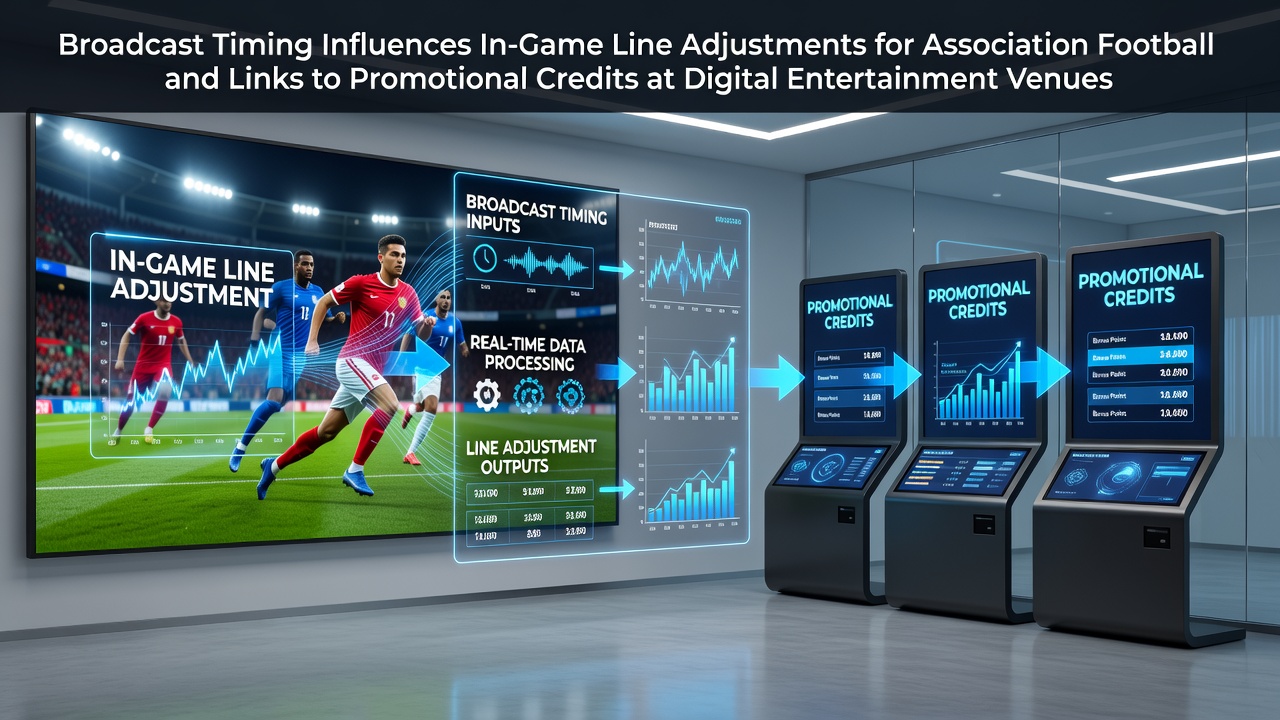
How Broadcast Timing Influences In-Game Line Adjustments for Association Football and Links to Promotional Credits at Digital Entertainment Venues
Broadcast timing plays a central role in how in-game betting lines shift during association football matches because live transmissions carry variable delays that affect when operators receive updated match data. These delays range from a few seconds in standard satellite feeds to longer intervals in some digital streams, and they determine the window in which bookmakers can recalculate odds before the next significant event occurs on the pitch. Data from providers such as Opta and Stats Perform reaches betting platforms through dedicated APIs, yet the moment a goal registers on screen for viewers often arrives after the line has already moved on the backend systems.
Real-Time Data Pathways and Adjustment Triggers
Operators monitor multiple inputs simultaneously, including official match clocks, player tracking sensors, and referee communications, so that any change in expected outcomes triggers immediate recalculation. A red card issued in the 67th minute, for example, prompts rapid adjustments to total goals and team win probabilities, but the broadcast signal that reaches most audiences may lag by eight to twelve seconds. This gap creates a narrow period during which sophisticated algorithms lock in new lines before casual viewers react. Research from the Nevada Gaming Control Board indicates that peak adjustment frequency occurs in the final twenty minutes of halves when both goals and disciplinary actions cluster most densely.
Digital entertainment venues integrate these same data streams into their promotional systems, allowing them to issue credits automatically when line movement exceeds predefined thresholds. A sudden swing of more than 0.5 goals in the over/under market during a single broadcast segment can activate bonus triggers that credit user accounts within the same minute. These mechanisms rely on timestamp synchronization between the broadcast source and the betting engine, ensuring credits appear only after verified market shifts rather than viewer speculation.
Seasonal Patterns and Platform Responses in 2026
August 2026 marks the start of several major European leagues operating under revised broadcasting contracts that emphasize lower-latency delivery, which in turn compresses the interval between on-field events and line updates. Platforms respond by tightening the parameters that govern promotional credit distribution, requiring users to place wagers within tighter time windows after each adjustment. Industry reports from the Australian Communications and Media Authority show that venues in regulated markets have reduced average credit issuance windows from forty-five seconds to twenty-eight seconds in response to faster data pipelines.
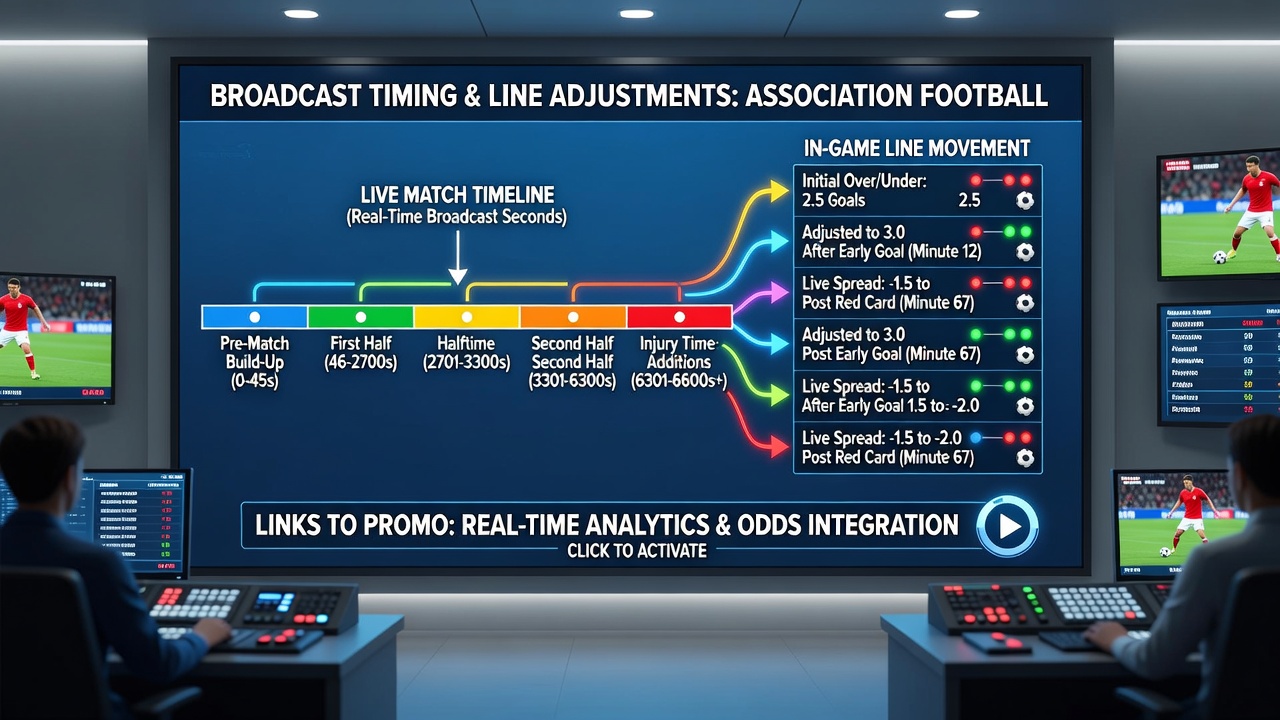
Those who track these systems note that the connection between broadcast timing and credit allocation becomes most visible during high-profile matches where multiple goal-line technologies feed simultaneous data streams. A single VAR review can produce two distinct adjustment waves: the initial probability shift based on referee signals, followed by a secondary movement once the broadcast confirms the decision. Venues program their credit engines to recognize both waves and release separate promotional tranches accordingly.
Geographic Differences in Credit Mechanics
European operators tend to tie credit releases directly to total goals markets, whereas North American platforms more frequently link credits to player-specific props that update after every substitution or injury. Canadian provincial regulators, including the Alcohol and Gaming Commission of Ontario, require documented audit trails that link each credit to a verifiable broadcast timestamp, reducing disputes over timing discrepancies. These regional variations influence how quickly users can redeem promotional balances during live matches, because the underlying data verification processes differ in speed and transparency.
One study conducted by researchers at the University of Nevada, Las Vegas examined over 1,200 matches across five leagues and found that credit activation rates increased by 34 percent when broadcast delays fell below six seconds. The same analysis revealed that venues using multiple redundant data feeds experienced fewer credit reversals, as cross-verification prevented erroneous line movements from triggering payouts. Observers note that these technical safeguards also limit the window during which users can exploit timing mismatches between public broadcasts and proprietary feeds.
Conclusion
Broadcast timing therefore functions as both a technical constraint and a commercial trigger within the ecosystem of in-game association football betting. Line adjustments occur in response to verified match events, yet the precise moment those adjustments become available depends on feed latency and API synchronization. Digital entertainment venues have built promotional credit systems around these same timing parameters, releasing balances only after confirmed market shifts. As August 2026 approaches with new broadcasting standards, the intervals between events, adjustments, and credit availability continue to narrow, shaping how operators and users interact with live football markets across different regulatory jurisdictions.